Refractive Procedures – Restoring Clear Vision Without Glasses
Refractive Procedures are modern surgical techniques that help correct common vision problems like myopia (nearsightedness), hyperopia (farsightedness), astigmatism (blurred or distorted vision due to an irregularly shaped cornea), and presbyopia (age-related difficulty in seeing nearby objects). These procedures reduce or eliminate the need for glasses or contact lenses—bringing clarity and comfort to daily life.
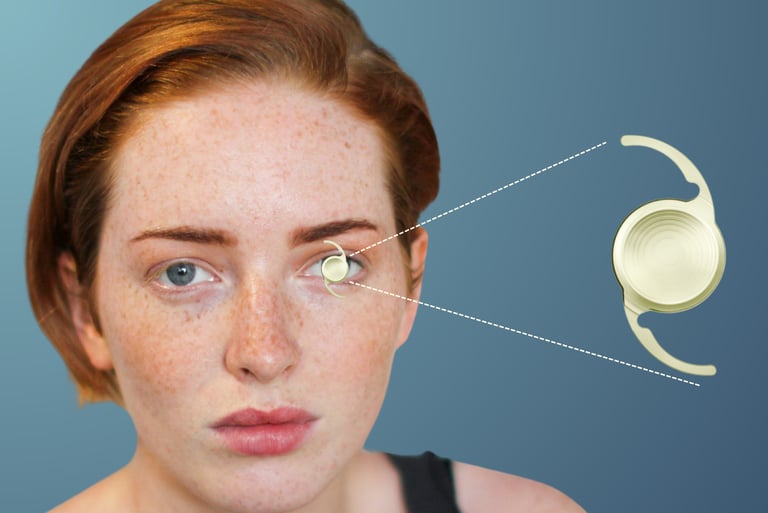
Refractive procedures involve reshaping the cornea or replacing the eye’s natural lens by an Intraocular Lens (IOL) to improve how light is focused on the retina. The most common goals are:
What are Refractive Procedures?
To correct refractive errors
To provide greater visual independence
To improve quality of life
Understanding the Types of Intraocular Lenses (IOLs)
When the eye’s natural lens is removed or replaced (as in cataract or refractive lens exchange), different types of IOLs are used:
Monofocal IOL
Toric IOL
Trifocal IOL
EDOF (Extended Depth of Focus) IOL
Offers clear vision at one fixed distance (usually far)
Patients may still need glasses for reading or intermediate tasks
Designed for patients with astigmatism (a condition where cornea is not perfectly round, causing blurred or distorted vision)
Corrects both cylindrical power and distance vision
Provides clear vision at near, intermediate, and distance
Reduces the need for glasses at all distances
Offers a continuous range of focus from distance to intermediate
Lower chances of glare/halos compared to trifocal lenses
Advanced Lens Implants
A lens is implanted without removing the natural lens
Ideal for high myopia (difficulty seeing distant objects clearly), thin corneas, or dry eyes unsuitable for LASIK
Reversible and does not involve corneal reshaping
ICL (Implantable Collamer Lens) / IPCL (Implantable Phakic Contact Lens)
RLE (Refractive Lens Exchange)
The eye’s natural lens is replaced with an IOL without the presence of cataract
Suitable for people 40+ with presbyopia (age-related loss of near vision) or high hyperopia (difficulty seeing nearby objects clearly)
Same procedure as cataract surgery but done for refractive correction
Refractive Procedure - Steps Involved
Before the Procedure
During the Procedure
After the Procedure
Comprehensive eye examination: Includes corneal topography, refraction, intraocular pressure, and retina check
Patient counseling: Choice of IOL/procedure based on lifestyle, eye health, and visual needs
Pre-op instructions: May include stopping certain medications, using antibiotic drops, and arranging post-surgery transport
Anesthesia: Usually topical (eye drops); procedure is painless and takes 10–20 minutes
For ICL/IPCL: A tiny incision is made and the lens is placed between the iris and natural lens
For RLE/IOL implantation: The natural lens is removed using phacoemulsification (a modern technique where ultrasound waves break up the cloudy lens for easy removal) and replaced with the chosen IOL
No stitches needed in most cases; the wound is self-sealing
Recovery is quick—patients return home the same day
Post-op care: Eye drops to prevent infection and inflammation, regular follow-ups
Avoid rubbing the eyes, swimming, or heavy lifting for a few weeks
Vision typically improves within a few days, with full results visible in a few weeks
Who is Eligible?
Adults 18+ with stable vision for at least a year
Those with healthy eyes (no active infections or retinal issues)
People intolerant to contact lenses
Patients seeking clear vision after cataract surgery (via premium IOLs)
High refractive error patients not eligible for LASIK
A comprehensive eye exam is necessary to confirm eligibility.
Refractive procedures at Anandeep Netralaya are tailored to your unique vision needs—whether you're a young adult with high myopia or someone looking to ditch reading glasses in your 40s. With advanced diagnostic tools, expert surgeons, and a range of IOL options, we help you achieve crisp, clear, and spectacle-free vision with confidence.